
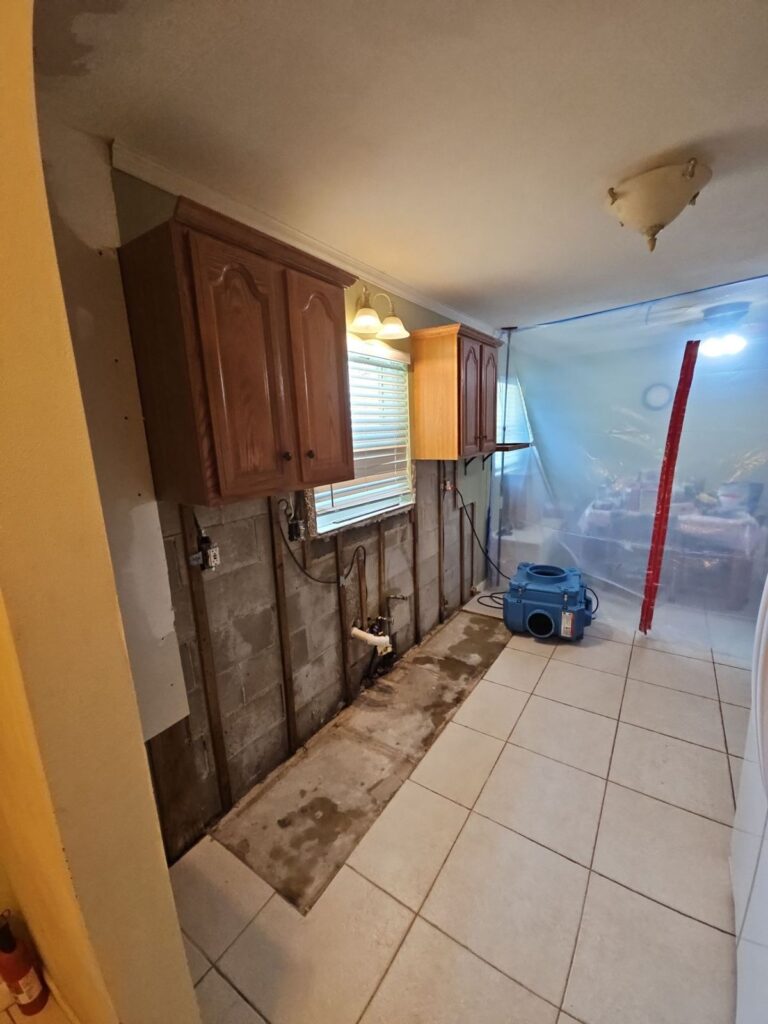
The homeowner in this Titusville kitchen didn’t call us about mold. She called about a smell under the sink and a cabinet floor that had gone soft. By the time we pulled the first base cabinet away from the wall, the answer was on the back of it. This is what a slow drain leak does to a kitchen over time, and what it takes to put it right.
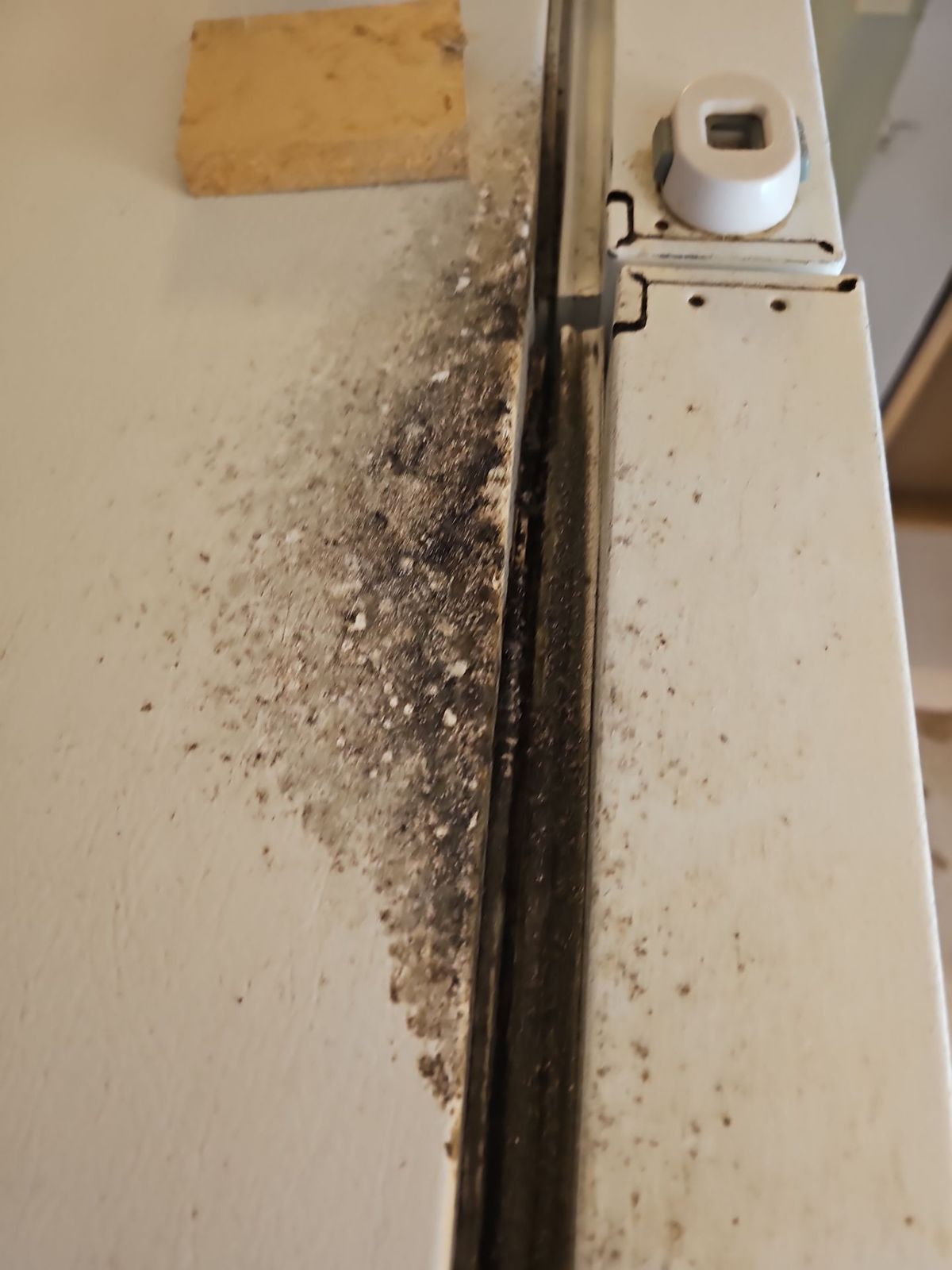
How a drain leak hides for months
A supply line leak announces itself. Water sprays, the cabinet floods, you know within an hour. A drain leak is quieter. The joint under the sink only weeps when water is running through it, so it drips a little every time the dishes get done and then stops. The cabinet floor dries on top while the particleboard underneath keeps drinking. The wall behind the cabinet never sees daylight, so it never dries at all.
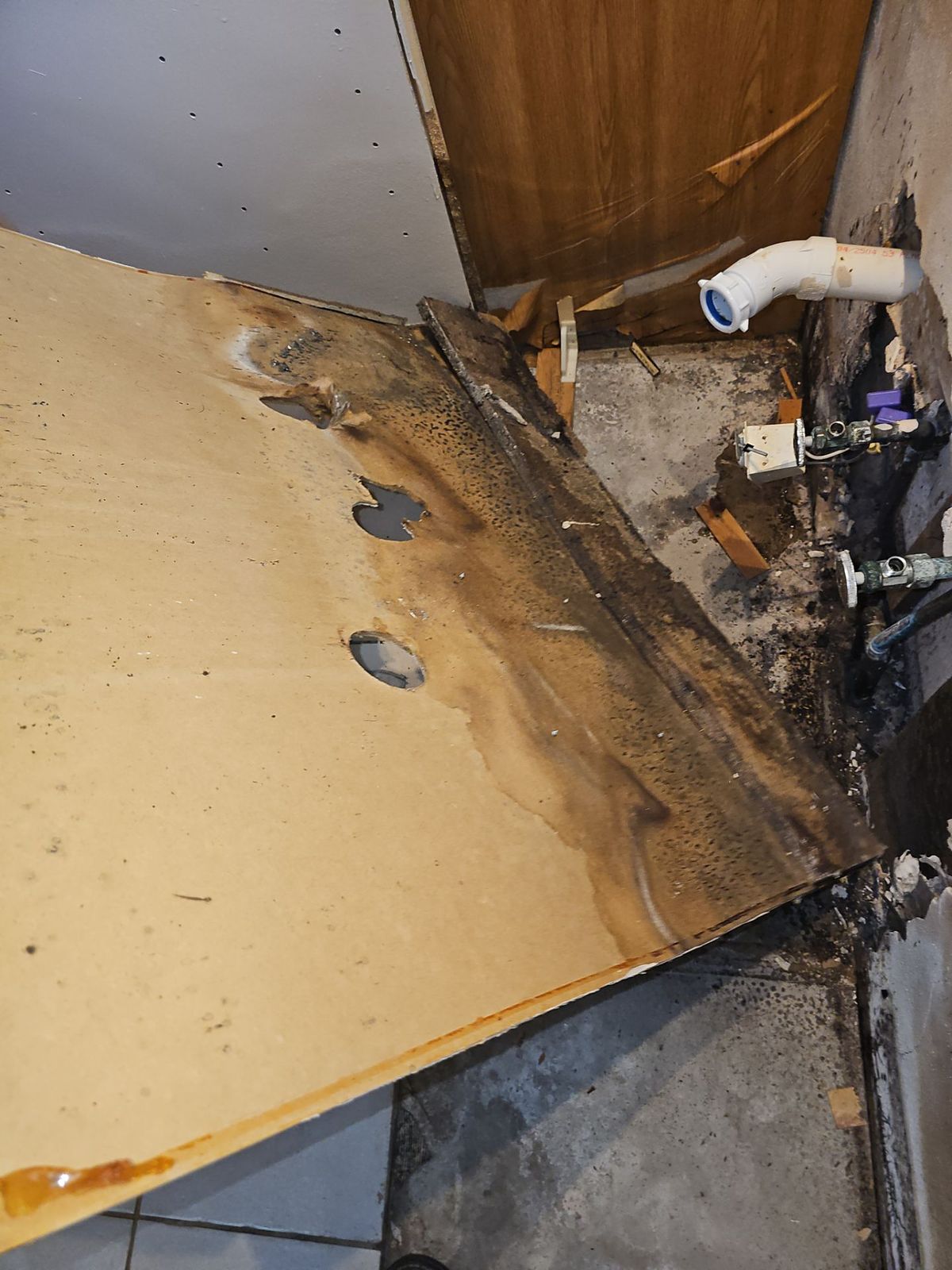
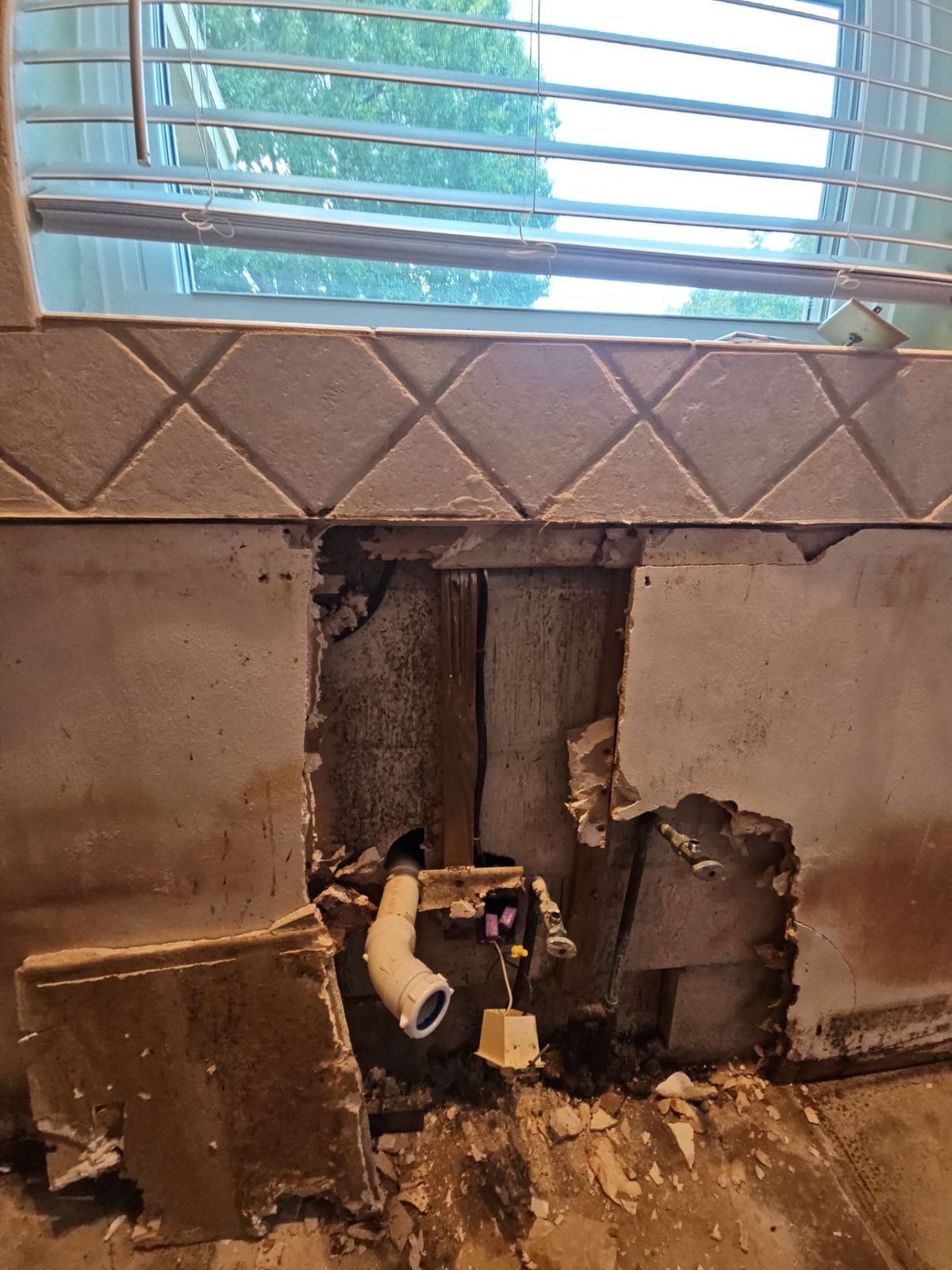
That’s the pattern we found here. The drain line behind the sink had been leaking long enough that the cabinet base had rotted through, the back of the cabinet was black with growth, and the drywall and bottom plate behind it were stained and holding moisture. None of it was visible with the cabinet doors closed.
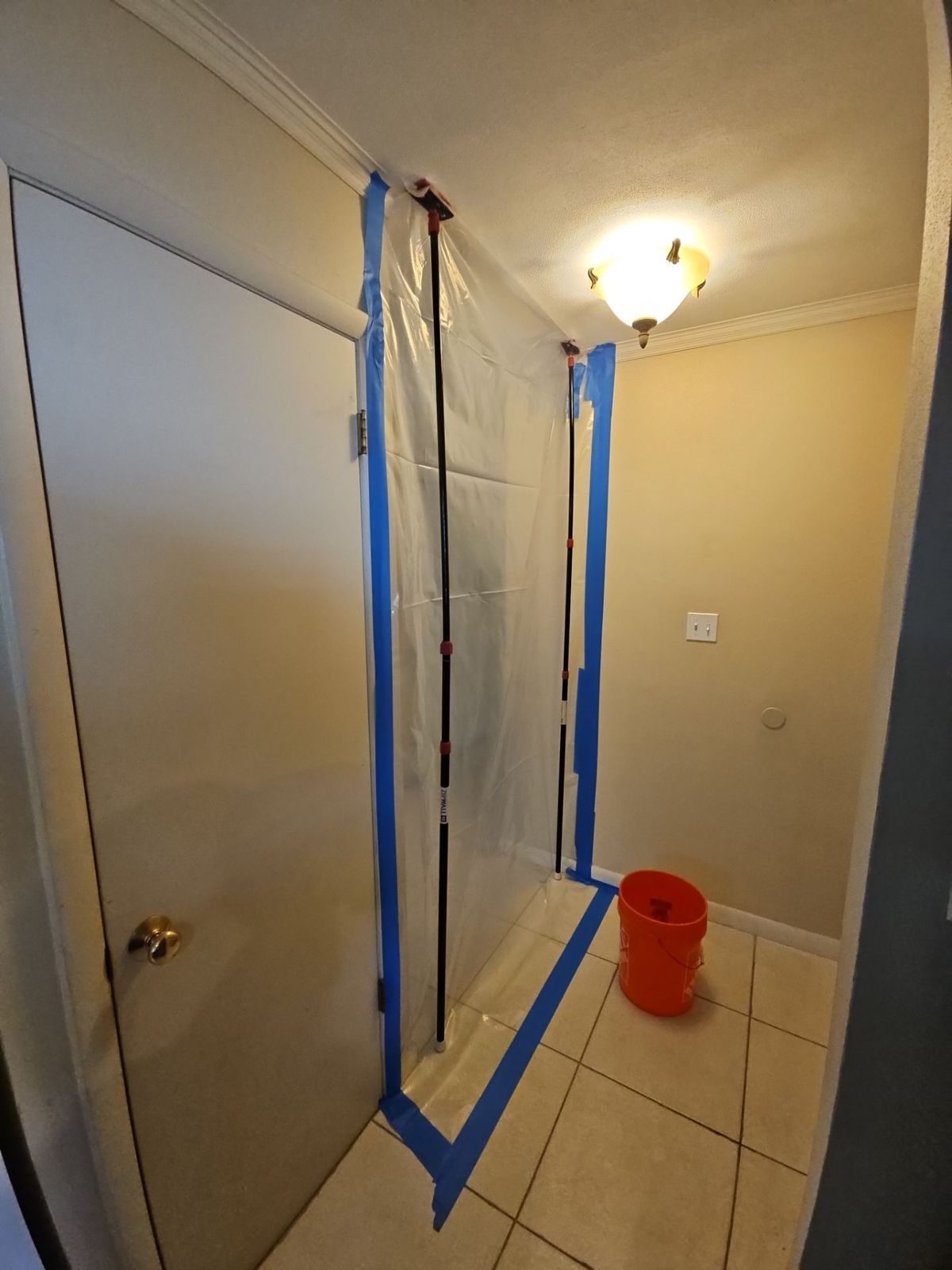
Containment first, then the cabinets come out
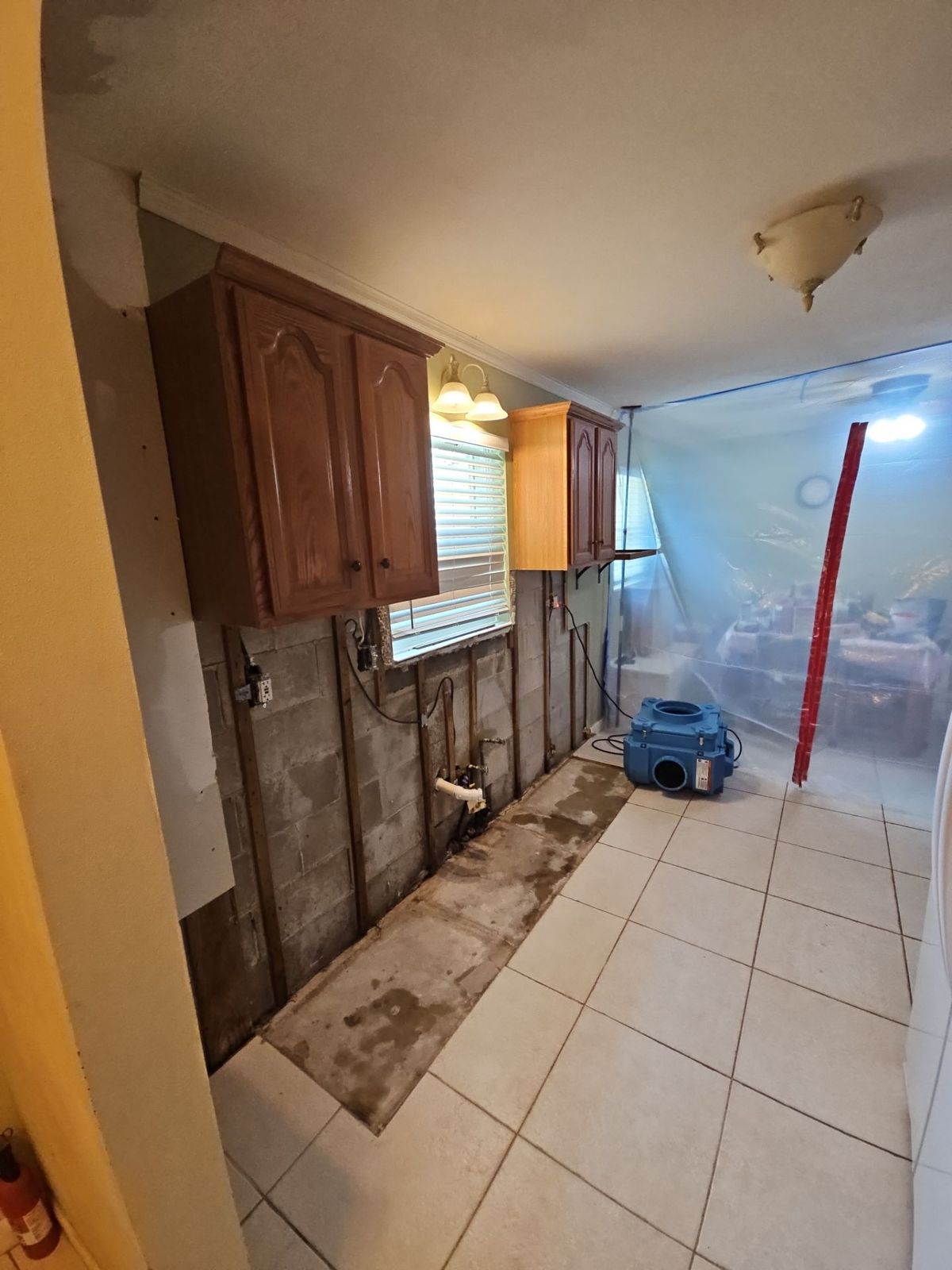
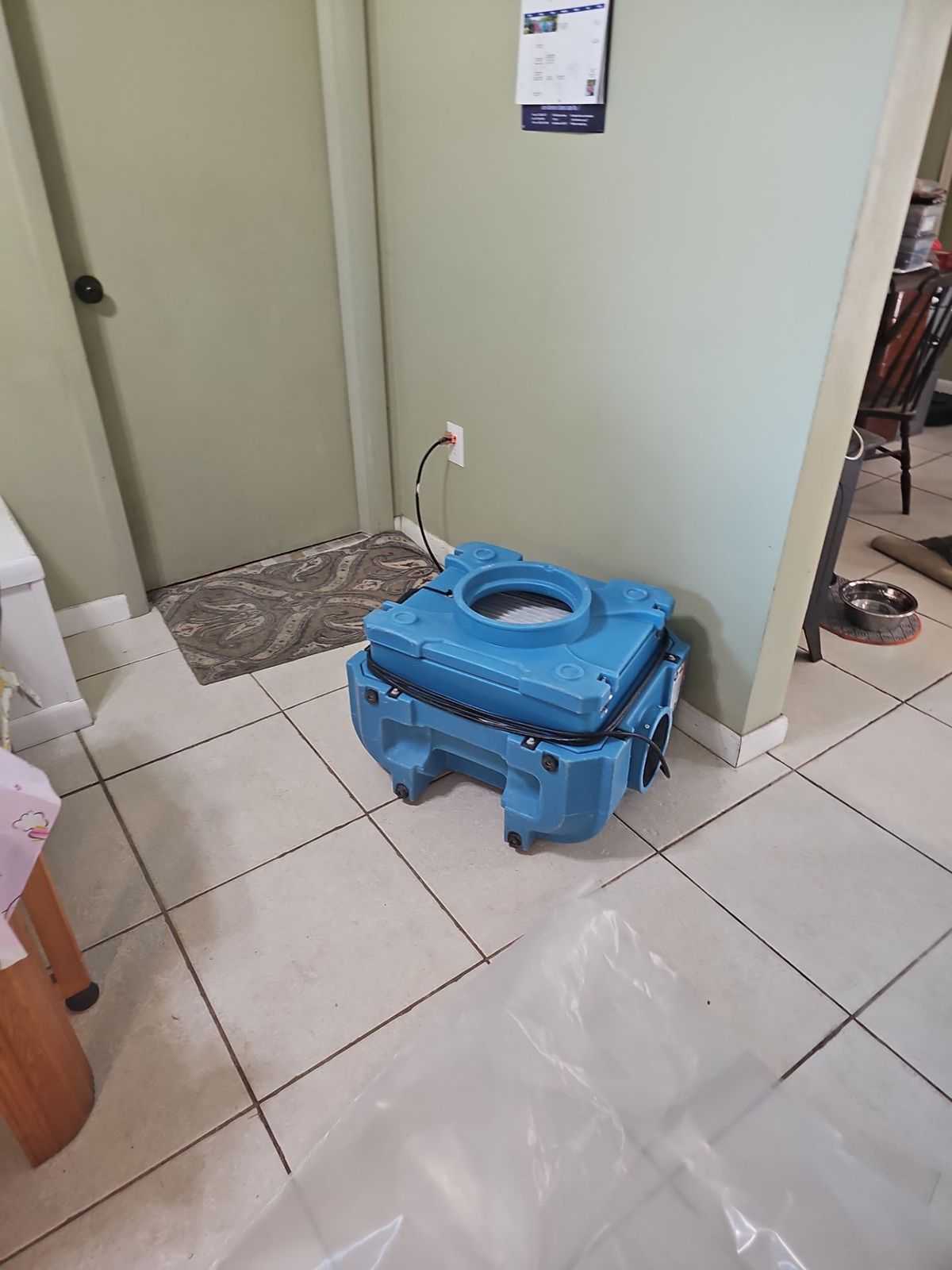
Before we touch anything on a mold job, the work area gets sealed. Plastic goes up across the doorway, the air scrubber starts running, and it stays running until the last bag of debris is out of the house. The point is simple: whatever is growing behind the cabinets stays in the kitchen instead of drifting into the living room and the bedrooms while we work.
Then the lower cabinets along the affected wall came out, and the bottom section of drywall behind them. Mold-affected particleboard and drywall can’t be cleaned; the growth is inside the material, not on the surface. So it gets bagged and removed, the framing underneath gets cleaned and treated, and the cavity gets dried before anything new goes back in. We removed what was contaminated and left the rest of the kitchen alone.
What the kitchen looked like when we were done
This is the part homeowners find hard to picture before the job starts. A finished mold remediation doesn’t look finished. It looks like a kitchen with the lower cabinets gone and the bottom two feet of wall open, clean and dry, ready for the next trade. That’s on purpose. We don’t do the rebuild. Once the structure is clean and the readings say dry, we hand it off to a contractor you trust (or one we trust) for the new cabinets, drywall and paint, with photos and moisture logs so they know exactly what was done.
Two things have to happen before we close out a mold job like this one. The leak has to be fixed by a plumber, because remediating around a drain that’s still weeping just means doing it again next year. And when the scope calls for it, an independent licensed mold assessor clears the work. We never test our own remediation; in Florida the company that samples and the company that removes are kept separate, and we keep it that way too.
What the homeowner said
After the job she left us a Google review: “Very good people. Professional, efficient and very kind. I highly recommend this company.” (K. R., Titusville.) We only ask for a review after real work is done, never after an inspection, so every one of ours is tied to a job like this.
If your Titusville kitchen smells musty under the sink
Open the cabinet and press on the floor of it. If it’s soft, or there’s a dark line where the cabinet meets the wall, don’t wait for it to get worse. A free mold inspection is quick: we check the cabinet, meter the wall behind it, and tell you plainly whether this is a wipe-and-watch situation or a remediation. If it’s the second one, our Titusville mold remediation page explains how the job runs.
Questions we get on jobs like this:
Can you save the cabinets? Solid-wood doors and frames that stayed dry usually can. Particleboard boxes that got wet can’t. We’ll tell you which is which on the inspection.
How long does it take? Most residential mold jobs run about ten days start to finish, including drying time and the assessor’s clearance. A single-wall kitchen like this one is on the shorter end.
Does insurance cover it? Sometimes. A sudden leak is often covered; a slow leak that went on for months often isn’t, and mold has its own limits in most Florida policies. We document everything either way so you have what you need for the claim.
Why Brevard homeowners call us
We’re a small-town company, and we’re proud of our Brevard roots. We treat our customers like family, not like a number, and we take care of every home like it’s our own. We’ve never worked for an insurance company. On a claim, we work for you, the homeowner, because working for the insurer too would be a conflict of interest. We aim to do it right the first time, so you shouldn’t need to call us back unless something new happens.
Soft cabinet floor or a musty smell under the sink? Call Affordable Water and Mold Removal at (321) 890-2512 for a free mold inspection. We serve Titusville, Mims, Port St. John and all of Brevard County, Mon–Fri 8–5.
About the author: Daniel Ryan Townsend grew up in Port St. John and has spent 15+ years in the restoration field, starting in his early twenties as a helper for a Brevard County restoration company. He worked his way up from technician to lead tech, supervisor, and management, then opened Affordable Water and Mold Removal in March 2018. He has been IICRC certified for 10+ years and holds the WRT (water damage restoration) and AMRT (mold remediation) certifications, plus Florida mold remediator license MRSR3317.