
Most of the calls we get during the day are not emergencies. They’re a homeowner who noticed a stain, a smell, a soft spot in the floor or a high water bill, and wants to know one thing: is there water in my house that I can’t see, and how bad is it? That is a water damage inspection, we do them every day across Brevard County, and the first one is free.
What the inspection actually involves
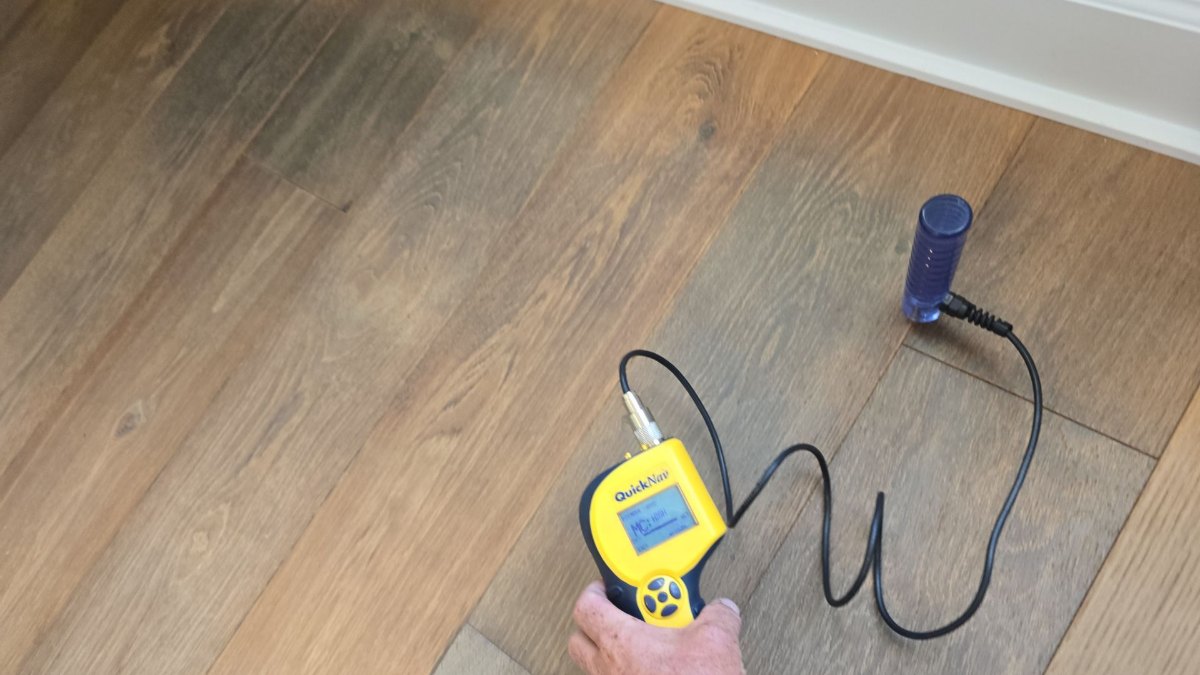
We don’t eyeball it. A tech walks the area with a pin moisture meter for direct readings in drywall, baseboard and wood, a non‑invasive meter for scanning larger areas without holes, a thermal camera that shows temperature differences where water is evaporating behind a surface, and a hygrometer for the air in the room. We check the obvious spot, then the places water actually goes: the bottom plate of the wall, the slab edge, the cabinet toe kicks, the closet that backs up to the shower, the subfloor under the vanity. On a two‑story house we check the ceiling below.
You get the readings, not a sales pitch. If the numbers are dry, we say so and leave, and you’ve lost nothing. If they’re wet, we show you where, explain what’s probably causing it, and give you a written scope for drying it. If the source is a leak we can’t see, we’ll point you to a leak detection specialist; see leak detection for what we do and don’t do there.
When to get one
A musty smell with no obvious cause. A stain on a ceiling or at the bottom of a wall. Baseboard that’s pulling away or paint that’s bubbling. A floor that cups, lifts or feels soft. A water bill that jumped. An A/C that’s been dripping. After a plumber fixed a leak but nobody checked what it soaked. Before you close on a house, if the home inspector flagged moisture. After a storm, if you had wind‑driven rain against a door or window. And any time you’re about to file a claim and want an independent set of readings before the adjuster shows up.
What it costs
The moisture evaluation is free, every time, anywhere from Mims to Palm Bay and the beaches. There’s no trip charge and no obligation. If drying work is needed, you get a written estimate first. If you want a formal written moisture report for a real‑estate transaction or a dispute, with photos and a diagram, we’ll quote that separately up front.
Inspection vs. testing
A water damage inspection is about moisture. A mold inspection is a visual look for growth and its cause, and we do those free as well. Lab testing of mold is a different thing: in Florida the company that tests should not be the company that removes, so any sampling is done by an independent licensed assessor, not by us. Our mold testing page explains how to find one.
What happens if it’s wet
If the readings are high and the water is recent, drying is usually straightforward: extraction if there’s standing water, open the wall or floor where needed, air movers and dehumidifiers for three to four days with daily readings until the structure hits dry standard. See structural drying. If it’s been wet for weeks, we’ll tell you plainly whether you’re looking at a drying job or a mold remediation job, because the two are priced and handled differently.
Insurance
If a claim is likely, the inspection is where the documentation starts. We photograph everything, log the readings room by room and keep that file for you. We work for the homeowner, not the carrier, and have never been on an insurer’s preferred vendor list. See how we document a water damage claim.
Want someone to look? Call or text (321) 890-2512. Free moisture evaluation, Monday to Friday 8 to 5, usually scheduled next day, same day if water is active. We serve all of Brevard County; see service areas.