Most water damage jobs in Brevard County end up as an insurance claim, and the claim goes the way the documentation goes. Not the way the damage looked, not the way you remember it; the way it’s written down. We document every job as if an adjuster is going to read the file, because one usually does.
Who we work for
You. We are not on any insurance company’s preferred vendor or managed‑repair list and never have been. Those programs trade the contractor’s independence for referrals, and the scope ends up written to the carrier’s budget instead of to what the house needs. We write the scope to the house. You can still use us if your carrier offers you a “preferred” company; in Florida the choice of contractor is yours, and it’s worth reading your policy on that point.
What goes in your file
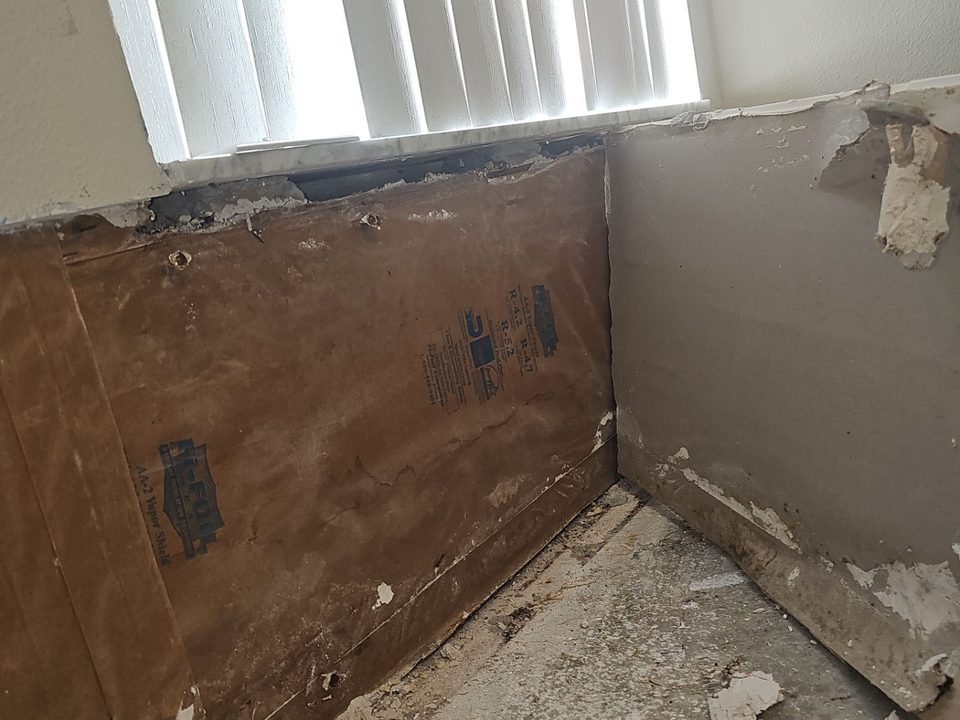
Photos, before anything is touched. Wide shots of each room, close‑ups of the damage, the source, and every meter reading with the meter in the picture. Then photos at each stage: after demolition, equipment in place, and at the end.
A moisture map. Room‑by‑room readings on day one, compared against a dry reference in the same material, so the wet area is defined by numbers rather than by what’s visible.
Drying logs. Daily temperature, humidity and material readings until the structure meets dry standard, plus the equipment list and how many days each piece ran. This is the part most claims are missing and the part that justifies the drying charges.
The category and class of water. Clean, grey or black, and how much of the structure is involved. It determines what has to be removed versus dried, and adjusters check it.
An estimate written in Xactimate. The same line‑item software most carriers use to price claims, so the adjuster is comparing like with like instead of arguing over a lump sum.
The cause‑of‑loss note. What failed, where, and whether it was sudden or long‑term, in plain language. Policies generally cover sudden and accidental water damage and generally don’t cover long‑term seepage, so this one paragraph matters a lot.
What we don’t do
We don’t promise what your policy will pay; every policy is different and that’s between you and your carrier. We don’t negotiate the claim for you, and we don’t inflate a scope to “make up” for a deductible. If a claim is large or contested, a licensed public adjuster works for the policyholder, and we’re happy to tell you when that’s worth considering. We also don’t do the rebuild; our documentation ends at a dry, clean structure, and we refer you to contractors we trust for drywall, flooring and paint.
How it goes, in order
You call. We stop the spread and document the loss as we find it. You notify your carrier (or we’ll help you figure out what to tell them). We dry and clean the structure and keep the daily logs. At the end you get the complete file: photos, map, logs, estimate and cause‑of‑loss note. Your adjuster gets whatever you want to share. If they have questions about the scope, they can call us directly, and they do.
Paying for it
Our contract is with you, the property owner, and payment is your responsibility whether or not a claim is approved. In practice, on a documented sudden loss, the claim usually covers the mitigation; see what water damage restoration costs in Brevard for real ranges. We take a deposit to start and the balance when the structure is dry. If you’d rather not file, that’s fine too; small jobs often cost less than a deductible, and we’ll tell you when that’s the case.
Starting a claim, or thinking about one? Call or text (321) 890-2512. Free moisture evaluation first, Mon–Fri 8–5, on site within the hour for active water. All of Brevard County; see service areas.