
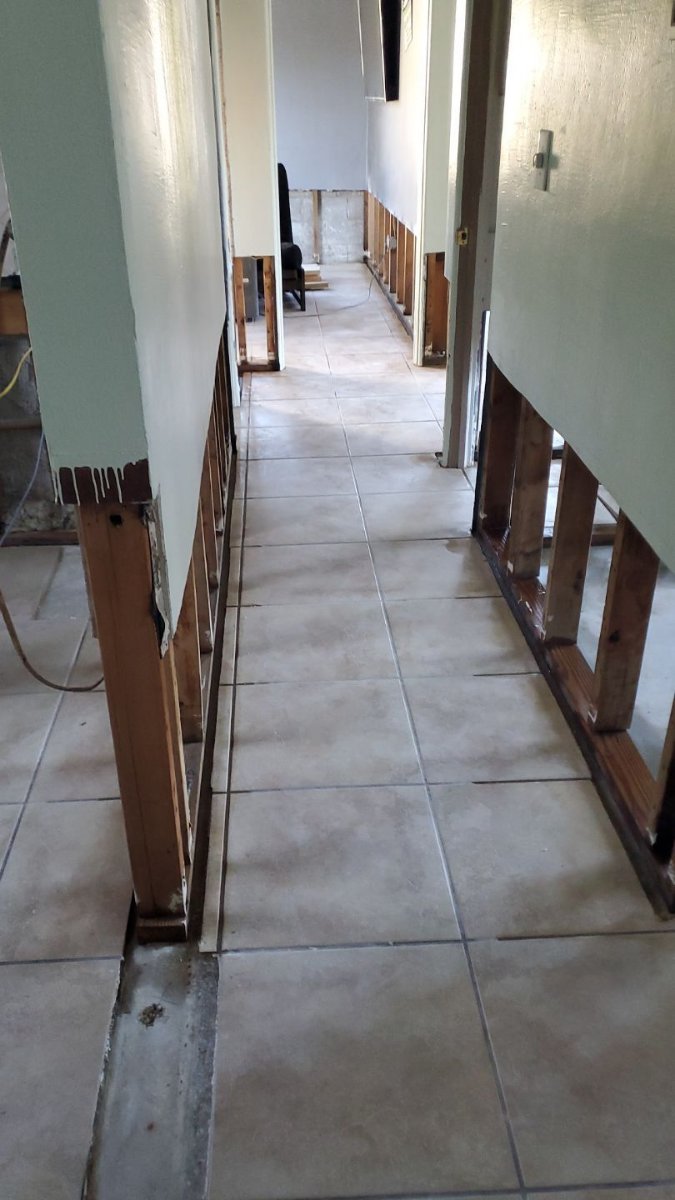
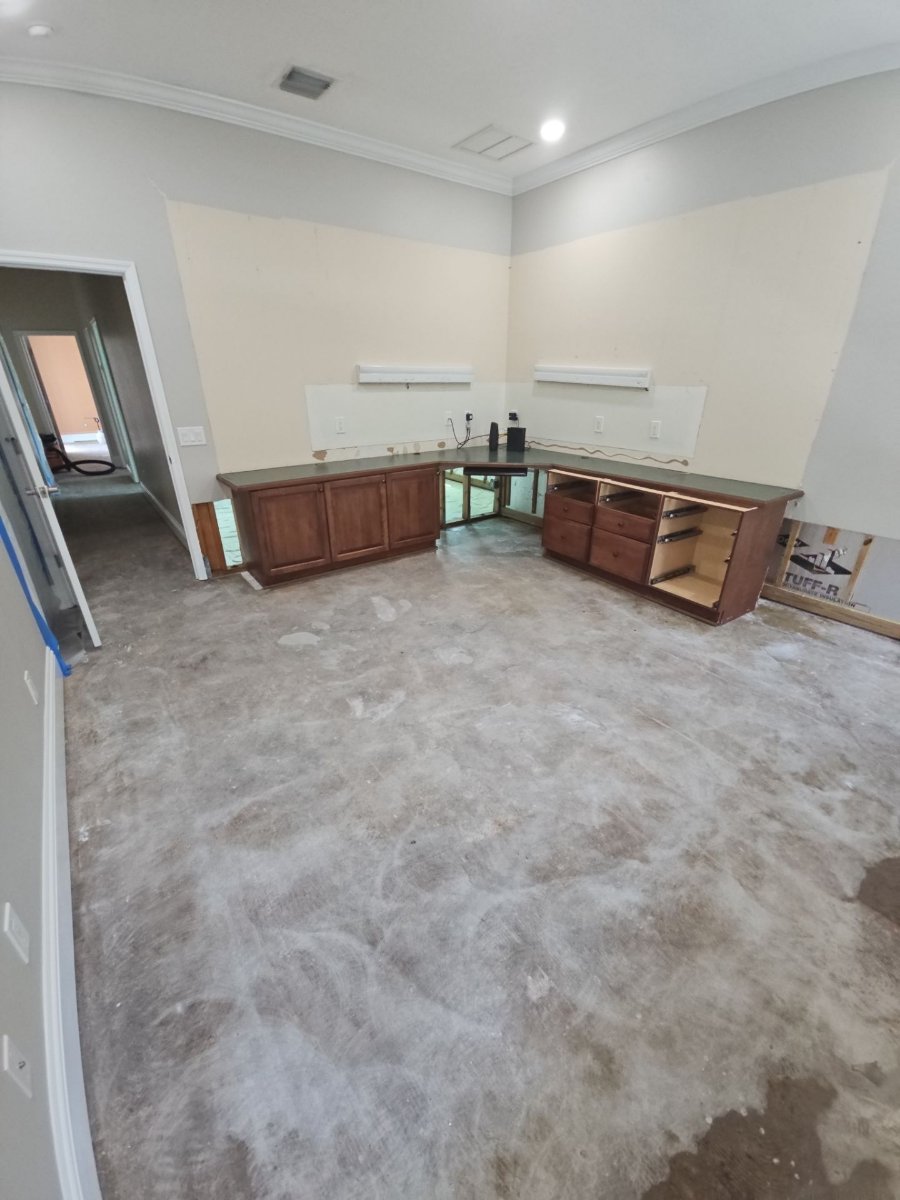
After the Nov 2 flooding in West Melbourne and Palm Bay, a lot of homes in Brevard County are sitting in the same state right now: the wet drywall is out, the cabinets are gone, the floor is up, and the house looks like a job half done. That is because it is. Tear-out is step one. A flooded home still needs three more things before anyone should close the walls back up: structural drying, sanitizing of everything that stayed, and a passing clearance. We do this work after the demo, whether a demo crew did the tear-out or you did it yourself.
Why “the wet stuff is out” is not the same as “dry”
When floodwater sits in a room for even a few hours, it soaks into more than the drywall. The bottom plates and studs behind the wall take on water. The slab holds water in its pores. Insulation that looks dry on the outside is wet in the middle. Pulling the drywall and the flooring exposes those materials, but it does not dry them. Open framing in a closed-up Florida house in November will often read 25 to 30 percent moisture a week after the water left, and anything over about 16 percent is enough for mold to start on wood.
FEMA’s rule of thumb is that anything soaked by floodwater needs to be dried within 24 to 48 hours or removed. Our West Melbourne and Palm Bay flood guide covers what has to come out. This page is about what happens to everything that stays.
Step two: structural drying
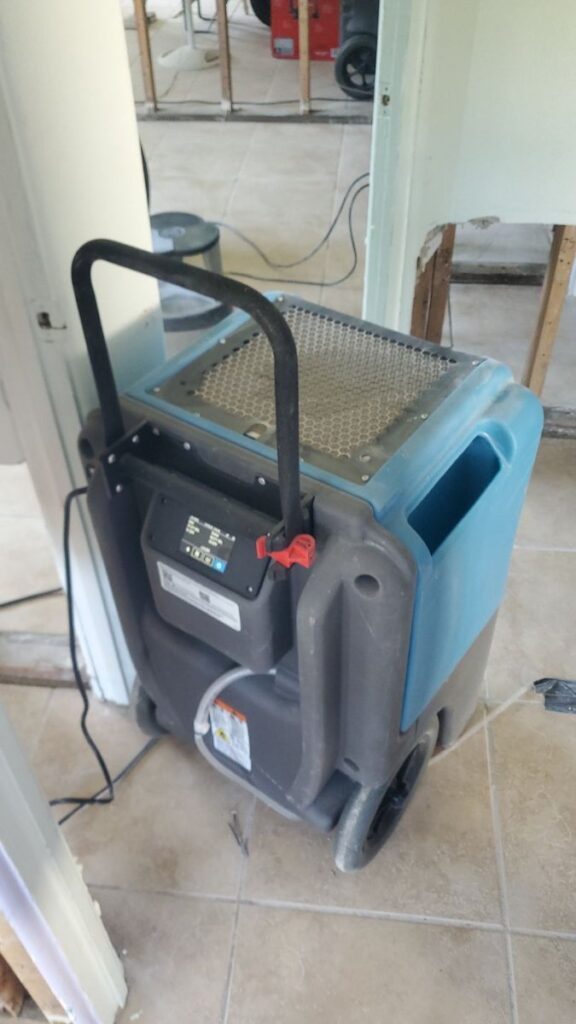
Structural drying means bringing the framing, the slab and any remaining wall material down to the same moisture content as the dry parts of the house, then proving it with a meter. On a flood job we do not do that with fans or air movers. Floodwater leaves bacteria and mold spores on every surface it touched, and a fan blowing across open framing pushes that into the air and through the rest of the house. Box fans from the hardware store are the worst version of this: they move contaminated air around and do not pull water out of a 2×4 or a concrete slab anyway. Flood drying is done with the room sealed off, a low-grain refrigerant dehumidifier pulling moisture out of the air so the materials keep giving it up, and HEPA air scrubbers holding the zone under negative pressure so what comes off the framing gets captured instead of spread.
- We map the wet area with a moisture meter and thermal camera first, so the equipment goes where the water actually is, not where the stain is.
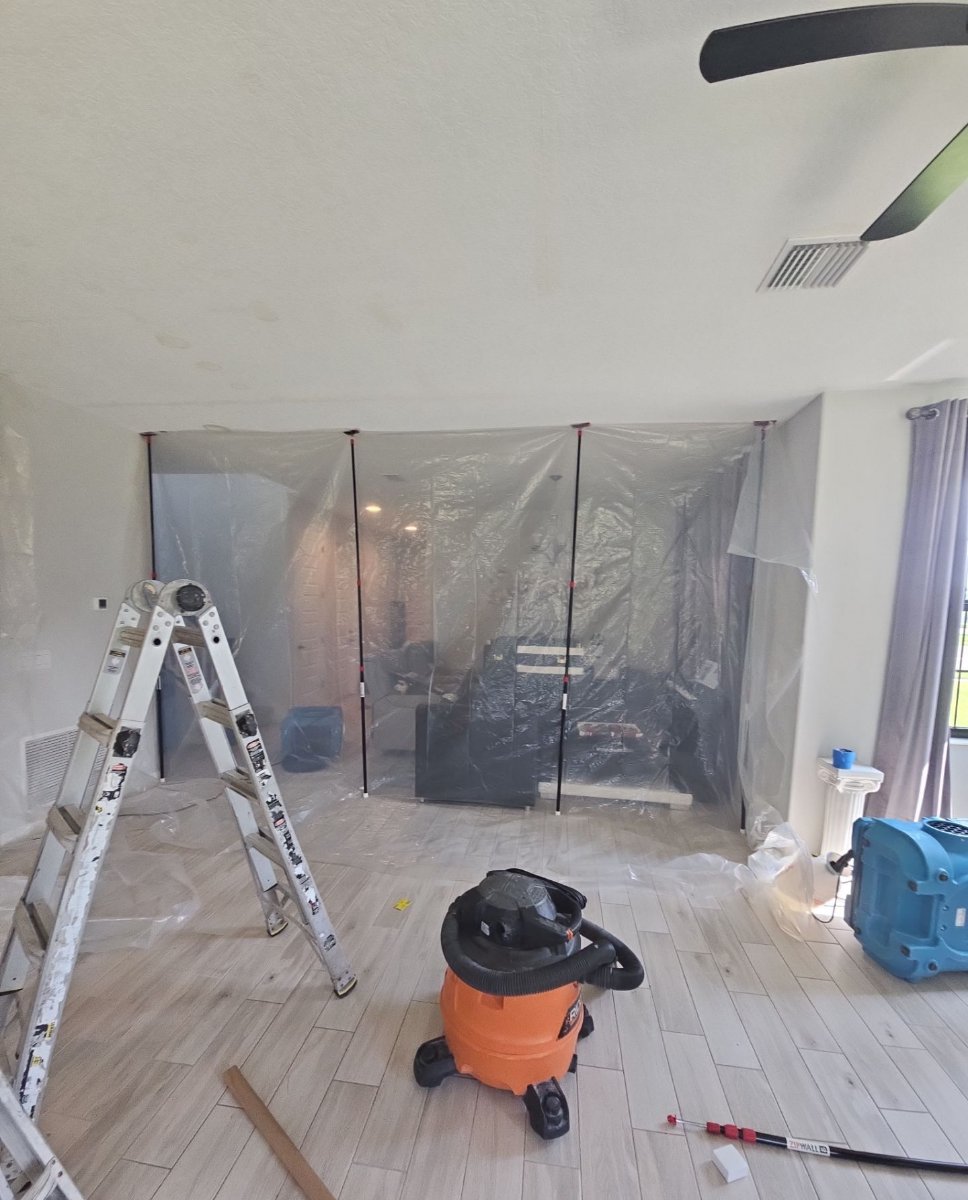
- Containment plastic keeps the drying zone small and sealed. A smaller zone dries faster, and nothing from the flooded area gets into the rooms that stayed dry.
- We check every material daily and log the readings. Most flood jobs in Brevard dry in three to five days once the demo is done right.
- Done means the framing and slab read at the dry standard for the house, not that the equipment ran for a set number of days.
Step three: sanitizing what stayed
Floodwater is Category 3 water under the IICRC S500 drying standard. It came through yards, roads and storm drains, so it carries sewage, fuel and whatever else was in the street. Every surface it touched that is staying in the house, meaning the studs, bottom plates, the slab, the block, and the back of any cabinets or tile you are keeping, needs to be cleaned, not just dried. Drying stops mold. It does not remove the contamination the water left behind.
Our sanitizing step has three parts. First, HEPA vacuuming to pull dried silt and spores off the framing and slab. Second, a detergent wash of those surfaces so the antimicrobial can reach the material instead of sitting on top of dirt. Third, an EPA-registered antimicrobial applied to the exposed framing and slab, with HEPA air scrubbers running the whole time to catch what comes loose. If there is visible mold growth on the framing by the time we get there, which is common when a flooded house sat for more than a few days, that is treated as mold remediation under our Florida mold remediator license and follows the remediation process rather than a plain clean.
Step four: the clearance
A clearance is the independent check, done by a licensed mold assessor or industrial hygienist, that says the area is clean and dry enough to rebuild. In Florida the company that does the remediation is not allowed to do the clearance on the same job, and we think that is a good rule. A licensed mold assessor or industrial hygienist who does not work for us comes in after we finish, looks at the work, takes moisture readings, and usually pulls air or surface samples that get compared against an outdoor or unaffected-room sample. If it passes, you get a written report that says so. If it does not, we come back and fix whatever the assessor or hygienist found before anyone hangs drywall.
You do not always need a formal clearance after a water loss. After a flood you usually want one, for three reasons. Your insurance adjuster, if you have flood coverage, wants proof the mitigation was completed. If you ever sell the house, a buyer’s inspector will ask whether the flood area was cleared. And if a contractor closes up framing that was not actually dry or clean, the mold that grows behind the new drywall is a problem you will not see for a year. We set up the clearance for you with an assessor or hygienist we work with regularly, and we do not consider the job finished until it passes.
A tip for Brevard homeowners whose demo is already done
Before you let anyone rebuild, tape a two-foot square of clear plastic tight to the slab in the flooded room and another to an exposed bottom plate. Leave it 24 hours. If there is any fog or beads under the plastic, that material is still wet, no matter what it looks or feels like. Do the same thing if a contractor tells you it is “ready.” The plastic does not lie. If you would rather have a number, we will come out and meter it. The moisture evaluation is free.
Questions we are getting this week
My handyman already tore out the drywall. Can you just do the drying and cleaning? Yes. That is most of the calls right now. We meter the open framing and slab, set up containment, dehumidifiers and air scrubbers, sanitize, and arrange the clearance. We do not need to have done the demo. If there are box fans running in the flooded room when you call, turn them off.
Does flood insurance pay for the drying, sanitizing and clearance? NFIP building coverage pays for mitigation of the flood damage, which includes drying and cleaning. It does not pay for mold, which is one more reason to dry and sanitize fast. We write the moisture logs and photo documentation the adjuster asks for. Standard homeowners policies do not cover rising water at all, so check which policy you are claiming under.
Flooded and the demo is done? Call (321) 890-2512
Affordable Water and Mold Removal, Inc. is based in Cocoa and works in Brevard County only, including Palm Bay, West Melbourne and Melbourne. We are IICRC certified and hold a Florida mold remediator license. We handle flood damage restoration, structural drying, sanitizing and mold remediation, and we coordinate the independent clearance. Rebuilding is done by your contractor after the clearance passes. Hours are Monday through Friday, 8 to 5. The moisture evaluation is free. Call (321) 890-2512 or send us a message.